What to Expect From a Mold Provider Visit
What happens when I first reach out?
It starts with a request. You describe what you have seen, smelled or suspected, and the request goes to an independent provider who serves your part of the Detroit area. Localfield Mold Help is a referral site, so the provider, not the site, sets the scope, the schedule and the price.
Have your notes ready. Where is the problem? When did you notice it? Has the area had leaks, flooding or roof damage? Dated photos help a lot. The more clearly you describe it, the better the provider can plan the first visit.
What does the inspection visit look like?
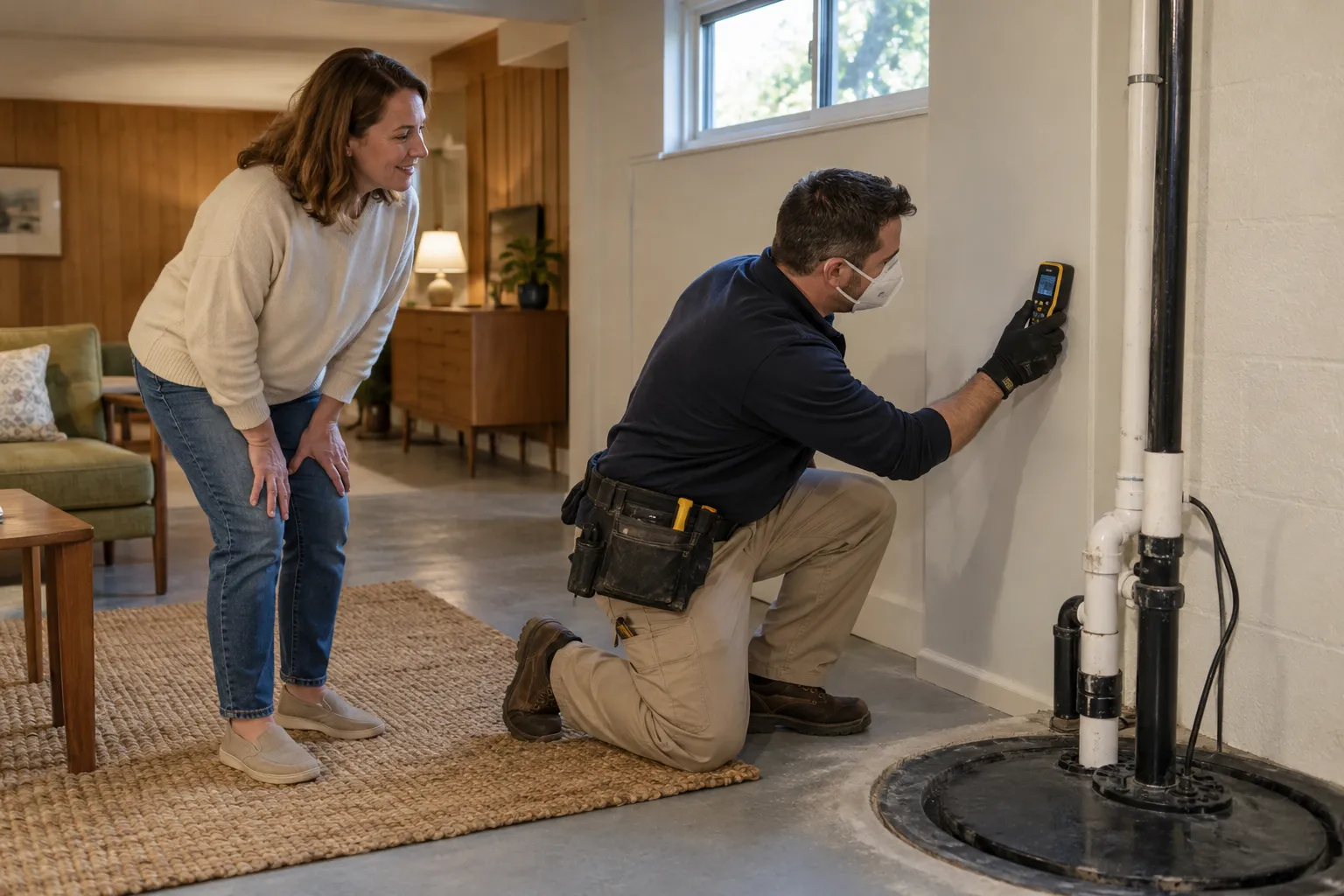
Expect a walk-through, and expect questions. The provider will usually look at the visible growth and the areas around it. Then the equipment comes out:
- A moisture meter to find damp materials
- A thermal camera to spot hidden cool or wet areas
- A flashlight and sometimes a camera for attics and crawl spaces
- Air or surface samples, when testing makes sense
You can help by clearing a path to the basement, attic or crawl space and moving stored items away from walls. Keep pets out of the way. If you have a sump pump, point it out and mention how it has behaved during storms.
After the visit, ask for findings in writing. You want to know what was found, where, and what is feeding it.
What should the written plan include?
A solid plan is specific. Look for:
- The areas to be treated and the materials to be removed
- How the work area will be sealed off and filtered
- How removed material will be bagged and disposed of
- How the area will be dried and the moisture source addressed
- Whether a follow-up clearance test is planned, and who performs it
- What is not included, such as rebuilding and repainting
It is also fair to ask about required local licensing and proof of insurance, and to compare more than one written plan.
What happens on work days, and what can I do?
The crew typically seals off the area with plastic sheeting and runs filtered air equipment so spores stay put. Affected materials are removed and bagged. Surfaces that can be saved are HEPA vacuumed and cleaned. Then the space is dried.
Your role is simple and important:
- Stay out of the work zone and leave the plastic barriers alone
- Keep children and pets away
- Follow any advice on running the HVAC system
- Ask about staying elsewhere if someone in the home has asthma, allergies or a weak immune system
This is the stage where professional skill matters most. Containment and air filtration are what keep a basement problem from becoming a whole-house problem.
How does the job wrap up?
The finish line has a few parts. The moisture source should be fixed, whether that means a leak, grading, gutters, a sump pump or ventilation. The area gets a final cleaning. Many providers or independent testers then run a follow-up clearance test to confirm the work. Then comes a walk-through, where you can ask questions and see the results.
Keep every piece of paperwork: the findings, the plan, the invoice and any test results. They are useful if you sell the home or talk with your insurer.
How do I keep mold from coming back?
This part is yours, and it is very doable. Keep humidity moderate with a dehumidifier in summer. Test your sump pump before storm season. Clear gutters and extend downspouts. Run bathroom fans, and fix small leaks early. Check the problem spots every few weeks, especially after heavy rain.
Ready to start the conversation? Send a request and share your notes.
Related guides
What to Expect From a Mold Provider Visit: questions
What should I do to prepare for the first visit?
Clear a path to the basement, attic or crawl space and move stored items away from walls. Gather your notes and dated photos, plus any records of leaks or repairs. Keep pets secured. Write down your questions in advance, such as scope, containment, disposal and testing afterward, so you do not forget them during the visit.
Do I need to leave the house during remediation?
It depends on the job. Small projects may let you stay in unaffected areas, while larger ones with heavy containment may be easier if you stay elsewhere. People with asthma, allergies or weak immune systems should ask the provider for advice. Always stay out of the work zone and leave containment barriers undisturbed.
How do I know the job is done?
Look for a repaired moisture source, a final cleaning, no musty odor and a written summary. A follow-up clearance test, which can run $200 – $600, adds confirmation. Ask what the test measures and who performs it. Keep all paperwork and photos for your records in case questions come up later.
Request a callback
Questions about mold in your home? Send a request through the form or email contact@localfield.garden. There is no obligation, and a local provider can follow up.
No obligation